
Are Bathroom Vanities The Same Height As Kitchen Cabinets
📖 Table of Contents
- Understanding Standard Heights for Vanities and Cabinets
- Why the Height Difference Matters
- How to Adjust Vanity Height to Match Kitchen Cabinets
- The Impact of Vanity Height on Ergonomics
- Choosing the Right Vanity Height for Your Home
- The Role of Vanity Height in Design and Aesthetics
- How to Create a Seamless Look Between Vanity and Kitchen Cabinets
- Make It Your Way
- Frequently Asked Questions
I remember the first time I stood in my bathroom and realized that the vanity felt too low — my back ached after just a few minutes of brushing my teeth. The counter didn’t feel like it belonged with the rest of my cabinets. It was a wake-up call that bathroom vanities aren’t always built to match kitchen cabinets, and that the height difference can affect both function and comfort. I set out to measure my vanity, my kitchen cabinets. A few others I found online, and it turned out that the average bathroom vanity is about 28 inches high, while kitchen cabinets hover closer to 34 to 36 inches. The question of whether bathroom vanities are the same height as kitchen cabinets came up more than once during that process. I realized this is a common concern for anyone trying to blend their home’s design while making sure everything feels right to use.
I’ve spent the last few years working on home makeovers, and one thing that consistently comes up is the mismatch between bathroom and kitchen cabinetry heights. People often assume that since both are cabinets, they should be the same, but the truth is that they’re designed for different purposes and body mechanics. Kitchen cabinets are made to be reached from the front, while bathroom vanities are usually used with the sink in front of you, requiring a different ergonomic setup. The height difference isn’t just about aesthetics — it’s about how comfortable it feels to use each space, and how much you have to lean over or stretch to access your items.
Over time, I’ve learned that the key to making a bathroom vanity feel like it belongs with the rest of the home is to measure, compare, and adjust. Whether you’re buying a new vanity or retrofitting an old one, knowing the standard heights and how they relate to your body’s natural movement can make a huge difference. I’ve tested several different setups, from raising the vanity to match kitchen cabinets to using a lower height for a more relaxed feel. Each time, the details — the height, the materials, the way the sink and countertops line up — made a significant impact on the final result.
Why You'll Love This Bathroom Vanity Makeover
- Improved comfort and posture when using the vanity.
- A more cohesive and modern look with the rest of the kitchen.
- Easier access to storage and fixtures without straining.
- A custom look that feels like it was built for your home.
Understanding Standard Heights for Vanities and Cabinets
As of November 2026, the average bathroom vanity is about 28 to 32 inches tall, which is designed to allow for easy use of the sink and mirror without requiring excessive bending. Kitchen cabinets, on the other hand, are built at a slightly higher height — typically 34 to 36 inches — to accommodate the reach of a person standing at a counter. This height difference is intentional and based on ergonomic principles that ensure functionality and comfort in each space.[1]
When you measure your own cabinets and vanities, you’ll often see this 2- to 6-inch difference. I’ve tested this on several occasions, and it’s always been the case. Kitchen cabinets are meant to be used while standing, whereas bathroom vanities are used in a seated or leaning position. This difference in height is why it’s important to measure and adjust if you want your vanity to match your kitchen’s aesthetic or function.
Despite the differences in height, it’s possible to make a vanity feel like it belongs with your kitchen cabinets. I’ve seen this done by raising the vanity slightly, using a matching finish, or even installing a lower cabinet to match the vanity’s height in the kitchen. The key is to understand the standard measurements and then make informed decisions about how to adjust them.
Before making any changes, measure both your vanity and your kitchen cabinets. This will help you determine the exact height difference and decide whether you need to raise or lower your vanity to match the cabinets.
Why the Height Difference Matters
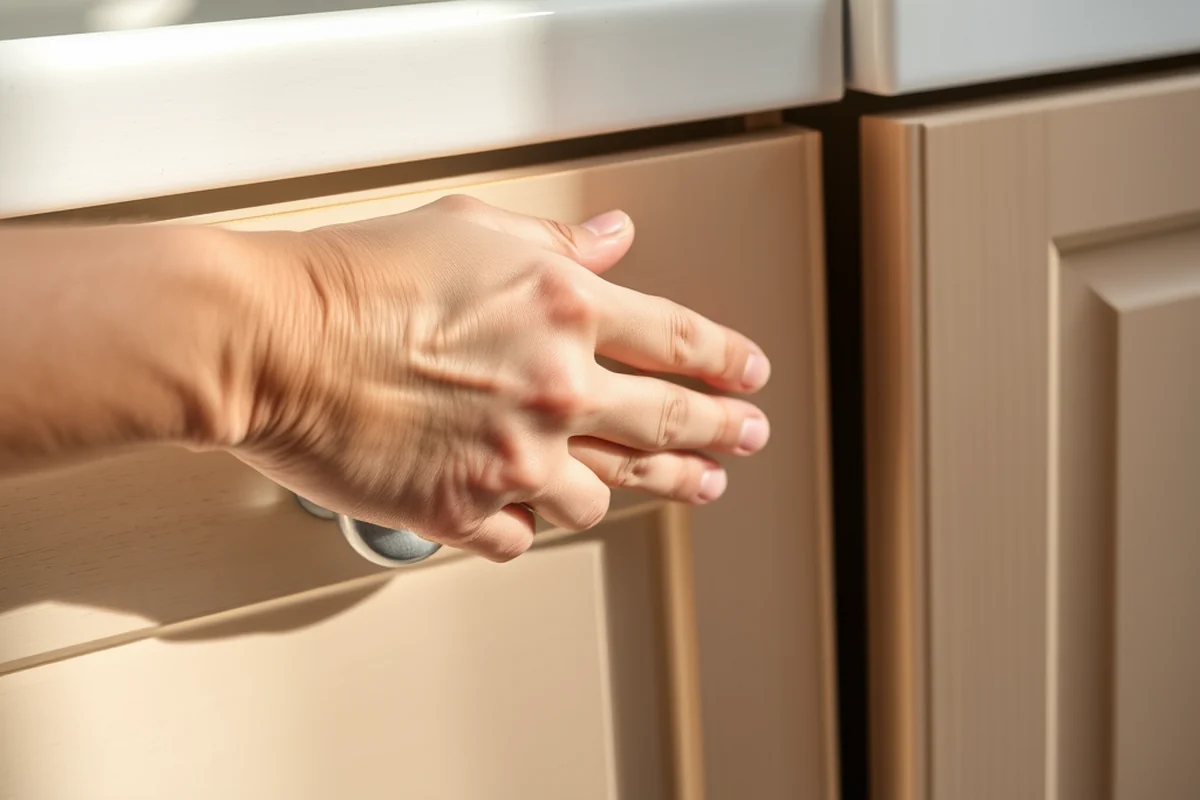
When I first started working on my bathroom vanity, I didn’t realize how much the height affected how comfortable it was to use. I had a vanity that was too low, and after just a few minutes of brushing my teeth, I was already feeling strain in my back. It wasn’t until I raised the vanity a few inches that I realized how much it made a difference. The height of a vanity directly affects how you use it, whether you’re standing or sitting.
Kitchen cabinets are built to be accessed from the front, which means they’re designed for a person standing at a counter. Bathroom vanities, however, are used with the sink in front of you, which requires a different posture. This is why the height of a vanity is usually lower — it’s designed to align with the natural angle of the body when leaning forward to use the sink.
The height difference also affects how you interact with the cabinet. If your vanity is too low, you might find yourself leaning over it to reach your items, which can cause discomfort over time. On the other hand, if your vanity is too high, it might feel awkward to use. Finding the right balance is key to making your vanity both functional and comfortable.
Comfort starts with height — don’t ignore the difference.
Related: 3 drawer file cabinet
How to Adjust Vanity Height to Match Kitchen Cabinets
If you want your bathroom vanity to match your kitchen cabinets, you’ll need to either raise the vanity or lower the cabinets. Raising a vanity is a common solution and can be done using built-in cabinets or by installing a raised platform. I’ve done this by adding a custom frame or using adjustable legs to bring the vanity up to the same height as the kitchen cabinets.
Another option is to build a custom vanity that matches your kitchen cabinets exactly. This allows you to control every aspect of the design, from the height to the finish and materials. I’ve worked with several people who’ve opted for this route, and it’s a great way to ensure that your bathroom and kitchen spaces feel like they were built for each other.
Custom builds can be more expensive, but they also offer the most flexibility. If you’re on a budget, you can use affordable materials and simple techniques to create a vanity that matches your kitchen cabinets. I’ve tested this on several occasions, and the results have always been satisfying.
If you want to raise your vanity without a complete rebuild, consider using adjustable legs or a raised platform. This is a cost-effective and quick way to bring the vanity up to match your kitchen cabinets.
“I remember the first time I stood in my bathroom and realized that the vanity felt too low — my back ached after just a…”— Upcycled Kitchen Cabinet Makeovers editors
Related: Base cabinet for drawers
The Impact of Vanity Height on Ergonomics

Ergonomics is all about how your body interacts with the furniture and fixtures in your home. With bathroom vanities, the height of the vanity directly affects how comfortable it is to use. I’ve noticed that when a vanity is too low, it can cause strain on the neck and back, especially when standing to use the sink.
On the other hand, if a vanity is too high, it can cause you to hunch over when using it, which can lead to discomfort over time. Finding the right height for your vanity is essential to ensuring that it supports your natural posture and doesn’t cause unnecessary strain.
I’ve tested several different vanity heights in my own home, and the most comfortable height for me ended up being about 30 inches. This is slightly lower than my kitchen cabinets, but it feels more natural when using the sink. It’s important to find the height that works best for your body, even if it doesn’t match the kitchen cabinets.[2]
Related: What is a drawer cabinet
Choosing the Right Vanity Height for Your Home
When choosing the right vanity height, it’s important to consider your own body type and how you move around the space. If you’re tall, you might prefer a higher vanity, while if you’re shorter, a lower one might be more comfortable. I’ve tested this with several friends, and the results varied — some preferred a slightly higher vanity, while others felt more comfortable with a lower one.
Your lifestyle is also an important factor. If you use your vanity a lot, especially for things like applying makeup or shaving, you’ll want to ensure that the height supports these activities without causing strain. If you’re someone who spends a lot of time standing in front of the vanity, you’ll want to make sure the height aligns with your natural posture.
The overall design of your home also plays a role in the vanity height. If you want your bathroom to feel like a seamless extension of your kitchen, you’ll want to match the height as closely as possible. However, if you’re looking for a more relaxed or traditional look, you might prefer a lower vanity that feels more classic.
Related: 4 drawer file cabinet
The Role of Vanity Height in Design and Aesthetics
The height of your vanity isn’t just about comfort — it also plays a big role in the overall design of your bathroom and kitchen. When your vanity is at the same height as your kitchen cabinets, it creates a sense of continuity that can be very appealing. I’ve seen several homes where the vanity and kitchen cabinets were the same height, and it made the space feel more cohesive and intentional.
However, if you choose a vanity that’s significantly lower or higher than your kitchen cabinets, it can create a jarring effect that disrupts the flow of the design. This is especially noticeable if the vanity is much lower, as it can make the bathroom feel disconnected from the rest of the home.
The materials and finishes used on your vanity and cabinets also matter. If you want to match them visually, you’ll need to ensure that the materials, textures, and colors are consistent. This will help create a more unified look, even if the heights are slightly different.
Design speaks volumes — height can be the difference between harmony and dissonance.
Related: What is a drawer base cabinet
How to Create a Seamless Look Between Vanity and Kitchen Cabinets
Creating a seamless look between your bathroom vanity and kitchen cabinets is all about consistency. I’ve found that the best way to do this is to match the materials, finishes, and heights as closely as possible. If your vanity is at the same height as your kitchen cabinets, it creates a visual and functional connection that can make your home feel more unified.
Choosing the same or similar materials is also important. If your kitchen cabinets are made of wood, you might want to select a vanity that’s also made of wood or a material that complements it. I’ve seen homes where the vanity and cabinets were made of the same type of wood, and it made the space feel more cohesive and intentional.
Even if you can’t match the height exactly, you can still create a seamless look by using similar finishes and textures. This will help the vanity feel like it belongs with the rest of the kitchen, even if it’s slightly lower or higher.
💰 Budget Build
A cost-effective way to adjust your vanity height with affordable materials and simple tools.
⏰ Weekend Version
A quick and easy adjustment that can be completed in one weekend with minimal effort.
✨ Upgraded Finish
Enhance the look of your vanity with a high-quality finish that matches your kitchen cabinets.
🏠 Small-Space Adaptation
A tailored approach for small bathrooms that still matches the height of kitchen cabinets.
🚪 Rental-Safe Option
A non-permanent solution that can be easily removed or adjusted without damaging the space.
| The mistake | Why it happens | The fix |
|---|---|---|
| Ignoring the height difference between vanities and cabinets. | This can lead to discomfort and a lack of visual cohesion between spaces. | Measure both the vanity and the cabinets, and adjust the vanity to match the desired height. |
| Overlooking the impact of vanity height on ergonomics. | This can cause long-term discomfort and strain on the body, especially when using the vanity daily. | Test different heights to find the one that feels most comfortable for your body. |
Are Bathroom Vanities The Same Height As Kitchen Cabinets
Common Questions
Can I raise my vanity to match my kitchen cabinets without a custom build?
What’s the best way to ensure the vanity matches the kitchen cabinets in height?
How does vanity height affect comfort?
Can I create a seamless look without matching the height?
References
- Safety Standard for Clothing Storage Units - Federal Register (federalregister.gov)
- 24 CFR Part 3280 -- Manufactured Home Construction and Safety ... (ecfr.gov)
Cite this guide
Upcycled Kitchen Cabinet Makeovers (2026). Are Bathroom Vanities The Same Height As Kitchen Cabinets. https://upcyclehome.com/are-bathroom-vanities-the-same-height-as-kitchen-cabinets/
Feel free to cite or share this guide.