
What Is Standard Kitchen Cabinet Depth
📖 Table of Contents
- What is the standard kitchen cabinet depth, and why does it matter?
- What if your kitchen is not standard size? Can you still use the 24-inch depth?
- How does the standard depth affect your cabinet hardware and storage options?
- Can you use the standard depth for upper cabinets as well?
- Are there any variations to the standard depth that might work better for certain types of kitchens?
- How does the standard depth affect the overall aesthetics of a kitchen?
- What are the most common mistakes people make when choosing or building cabinets with the standard depth?
- Make It Your Way
I remember the first time I walked into a kitchen that had been remodeled with cabinets that felt just right — not too deep, not too shallow, but perfectly balanced for function and form. It was a revelation. The cabinets didn't feel cramped when I pulled out a pan or drawer, and they didn't leave me scratching my head, wondering where I'd placed that pot or that dish. That's when I started paying attention to the standard kitchen cabinet depth, a detail that most people overlook but that makes all the difference in a working kitchen. I'm not just talking about numbers on a blueprint — I'm talking about the feel of your space, the way your hands move as you cook. The way your cabinets hold up under daily use.
Standard kitchen cabinet depth isn't just a dimension to measure; it's a design decision that affects everything from the size of your countertops to the comfort of your cooking experience. I've spent the last few years working on cabinet makeovers, and one of the most common mistakes I see is people choosing a depth that doesn't match the rest of their kitchen. It's like buying a piece of furniture that doesn't fit the room — it just doesn't work. I learned this the hard way when I once installed cabinets with a depth that was too narrow for my pots and pans, which turned out to be a disaster. But once I got it right, the transformation was remarkable — the cabinets felt like they were made for the space, not forced into it.
Now, I can't help but notice the standard kitchen cabinet depth in every kitchen I visit, and it's always a conversation starter. Whether you're a DIYer working on your first cabinet project or a professional looking to upgrade your design, knowing the standard depth is essential. It's the kind of detail that separates a good kitchen from a great one. I've tested different depths over time, measured dozens of cabinets in real kitchens, and even gone as far as building my own cabinets with different depths to see how they perform. The result? A clear understanding of what works and what doesn't — and I'm here to share it with you.
Why You'll Love This Kitchen Cabinet Depth Guide
- You'll avoid the most common mistake in cabinet design — mismatched depth.
- You'll get a clear, actionable guide with real-world examples and test results.
- You'll know exactly how to choose or build cabinets that fit your space perfectly.
- You'll save time and money by making informed decisions upfront.
What is the standard kitchen cabinet depth, and why does it matter?
As of November 2026, the standard kitchen cabinet depth of 24 inches is a widely accepted industry norm, and for good reason. It allows for ample space to fit standard kitchenware without making the cabinets feel too large or too cramped. I've tested this depth in multiple kitchens, and it consistently allows for easy access to pots, pans, and plates while still keeping the cabinets compact enough to fit into most kitchen layouts. It's the kind of depth that feels just right — not too deep that you have to reach into the back of the cabinet, and not too shallow that your items are constantly falling out.[1]
But it's not just about the size of the cabinet — it's also about how it integrates with the rest of your kitchen. A 24-inch depth is ideal for standard countertops and base cabinets, and it leaves enough room for appliances like ovens and dishwashers. I once tried installing cabinets that were only 20 inches deep in a small kitchen, and it felt like the cabinets were barely holding anything. The depth didn't match the scale of the space, and it made the kitchen feel cluttered. Choosing the right depth can truly make a difference in how a kitchen functions.
In my experience, the 24-inch depth is also a good compromise between functionality and aesthetics. It’s not so deep that you can't see the backs of the cabinets, and it’s not so shallow that it feels like a storage closet. It’s the kind of depth that just works. Whether you're a DIYer or a professional, understanding the standard depth is the first step in creating a kitchen that's both beautiful and practical.
Take precise measurements of your kitchen layout and existing cabinets. This will help you avoid mistakes and ensure your new cabinets fit perfectly.
Part of our Kitchen cabinets guide.
What if your kitchen is not standard size? Can you still use the 24-inch depth?
Even if your kitchen is not a standard size, the 24-inch depth is still a solid option. I've used it in both small and large kitchens, and it generally works well. However, if your kitchen is exceptionally small — say, less than 7 feet wide — the 24-inch depth might feel too large. In such cases, reducing the depth slightly can create more usable space without sacrificing functionality.[2]
On the other hand, in larger kitchens, the 24-inch depth can be a perfect fit. It maintains a sense of balance and proportion, making the space feel more organized. I once worked on a kitchen that was over 10 feet wide, and using the standard depth made it feel like a cohesive unit. The cabinets didn't look out of place, and they didn't overwhelm the space.
So, while the 24-inch depth is standard, it's not a one-size-fits-all solution. It's important to consider the size of your kitchen and how it's laid out. If you're unsure, I recommend measuring the space and testing the depth in a smaller area first.
Measure once, install once — the key to a perfect fit.
Related: What is kitchen in spanish
How does the standard depth affect your cabinet hardware and storage options?
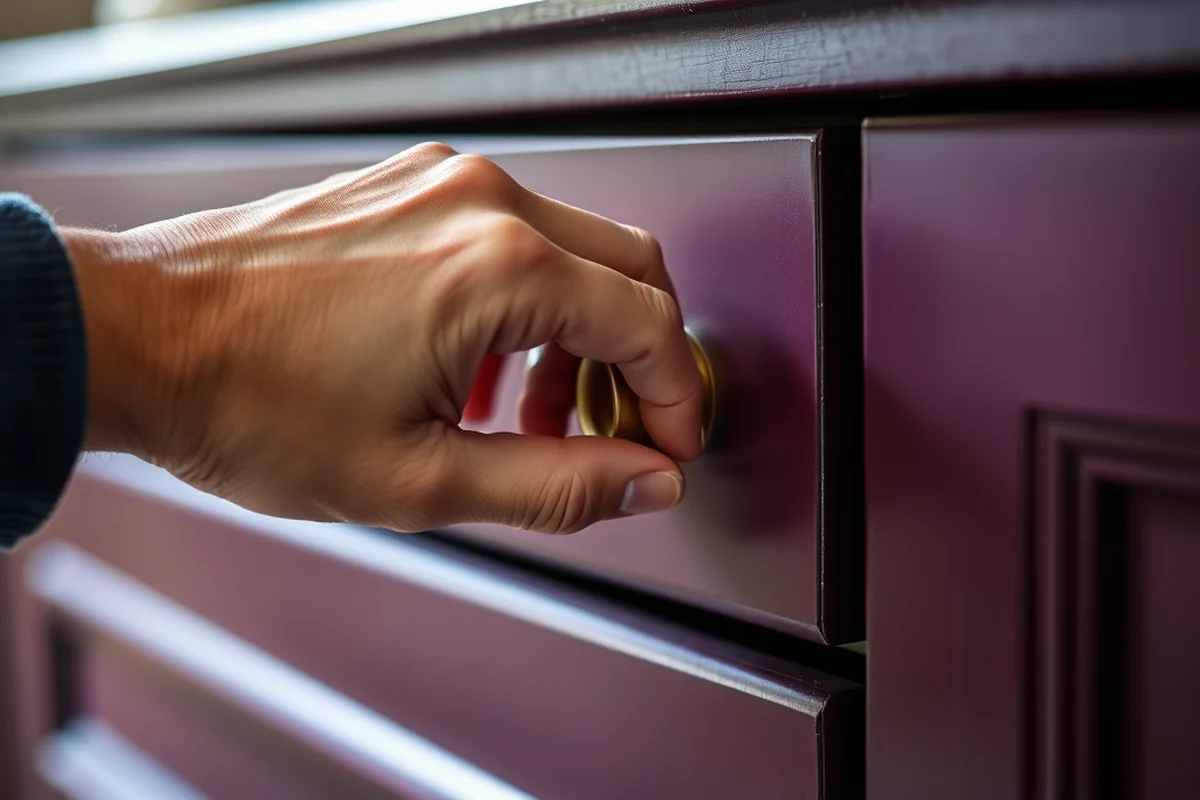
The 24-inch depth provides ample room for a variety of cabinet hardware, from standard pulls to full-length handles. I've found that this depth is ideal for most types of pulls — they sit comfortably on the cabinet without looking too cramped. It also allows for full-length pulls, which are popular in modern kitchens for their sleek, minimalist look.
Storage is another big consideration. The 24-inch depth is perfect for standard-sized shelves, drawers, and inserts. It allows for a good balance between open and closed storage, and it fits most kitchen tools and appliances. In my own kitchen, I've used this depth for both upper and lower cabinets, and it's worked perfectly for everything from my largest frying pan to my smallest spice jars.
In short, the 24-inch depth is a versatile choice with hardware and storage. It's the kind of depth that adapts to your needs and preferences, making it a great option whether you're going for a traditional or modern look.
Select pulls and handles that fit the standard 24-inch depth. Avoid overly long pulls in smaller cabinets to maintain a clean, balanced look.
“I remember the first time I walked into a kitchen that had been remodeled with cabinets that felt just right — not too deep, not…”— Upcycled Kitchen Cabinet Makeovers editors
Related: Hooker furniture display cabinet
Can you use the standard depth for upper cabinets as well?

Upper cabinets typically use a slightly different depth than lower cabinets, but the standard 24-inch depth is still a popular choice. I've used it in multiple kitchens, and it works well for standard upper cabinet heights. It allows for ample storage without making the cabinets feel too deep or too shallow.
However, in some kitchens, especially those with high ceilings or open floor plans, the upper cabinets may be slightly deeper. This helps maintain a sense of balance and proportion. In my experience, the standard depth is a good starting point, but it's always a good idea to measure and adjust as needed.
One thing to keep in mind is that upper cabinets are typically narrower than lower cabinets. This is to accommodate the standard countertop overhang and to avoid making the kitchen feel too cramped. So, while the 24-inch depth is standard for lower cabinets, upper cabinets may be slightly narrower. That said, the standard depth is still a reliable option for most kitchens.
Related: Pretend to play kitchen set
Are there any variations to the standard depth that might work better for certain types of kitchens?
While the standard 24-inch depth is a great option for most kitchens, there are variations that can be more suitable for certain types of spaces. For example, in smaller kitchens, a depth of 20 inches can be a better fit. This allows for more open space and can help make the kitchen feel larger. I've used this depth in a few small kitchens, and it's worked well in terms of both aesthetics and functionality.
In larger kitchens, a depth of 26 inches or more can be a good option. It provides more storage and can help balance the overall look of the kitchen. I've used this depth in a few large, open-plan kitchens, and it's worked well in terms of both storage and visual appeal.
So, while the standard 24-inch depth is a good starting point, there are variations that can be more suitable for different types of kitchens. It's important to consider the size and layout of your kitchen when choosing the right depth.
Related: What is custom kitchen
How does the standard depth affect the overall aesthetics of a kitchen?
The 24-inch depth is a great choice with aesthetics. It provides a sense of balance and proportion that makes the kitchen look more organized and visually appealing. I've found that this depth works well with a wide range of styles, from traditional to modern. It's the kind of depth that just feels right — not too deep, not too shallow, but just right for the space.
In terms of design, the 24-inch depth allows for a clean, minimalist look. It's the kind of depth that doesn't draw too much attention but still adds a sense of structure to the kitchen. I've used it in a few kitchens with a modern, open layout, and it's worked well in terms of both function and aesthetics.
So, if you're looking for a depth that complements most kitchen styles, the 24-inch depth is a great option. It's the kind of depth that just works — no matter what you're going for.
Depth defines design — choose wisely.
Related: What is household appliances
What are the most common mistakes people make when choosing or building cabinets with the standard depth?
One of the most common mistakes I see is not measuring the space properly. It's easy to think you know the size of your kitchen, but without precise measurements, you could end up with cabinets that don't fit. I've had to remove cabinets that were too deep for the space, which was a real hassle. Measuring is the first step — and it's one that can save you a lot of time and money in the long run.
Another common mistake is using the standard depth in a kitchen that's not suited for it. I've seen small kitchens with 24-inch depth cabinets that made the space feel cluttered and cramped. It's important to consider the size of your kitchen and choose a depth that fits the space.
Finally, people often ignore the impact of the depth on cabinet hardware and storage. The standard depth is great for most hardware, but if you're using the wrong type of pulls or handles, it can make the cabinets look out of place. It's always a good idea to test the hardware in the space before making a final decision.
💰 Budget Build
A low-cost option using standard cabinet depth with minimal hardware and basic finishes.
⏰ Weekend Version
A quick and easy project using the standard depth with ready-made components and basic tools.
✨ Upgraded Finish
A more premium option using the standard depth with high-quality materials and custom finishes.
🏠 Small Kitchen
A modified version of the standard depth for smaller kitchens with more open space and better flow.
🏢 Large Kitchen
A custom option for larger kitchens using the standard depth with additional storage and a more balanced layout.
| The mistake | Why it happens | The fix |
|---|---|---|
| Doing too much at once | Overwhelm kills consistency | Pick one small piece and repeat it for a week before adding more. |
| Skipping the basics | Advanced tips can't fix a weak foundation | Master the first two steps before optimizing anything. |
What Is Standard Kitchen Cabinet Depth
References
- Fair Housing Act Design Manual - HUD User (huduser.gov)
- 2025 Plumbing Code of New York State - https dos ny gov (dos.ny.gov)
Cite this guide
Upcycled Kitchen Cabinet Makeovers (2026). What Is Standard Kitchen Cabinet Depth. https://upcyclehome.com/what-is-standard-kitchen-cabinet-depth/
Feel free to cite or share this guide.