
Cabinet Organizer For Kitchen
📖 Table of Contents
- Understanding the Basics of Cabinet Organizers for Kitchen
- Choosing the Right Materials for Your Cabinet Organizer for Kitchen
- Customizing Your Cabinet Organizer for Kitchen
- Maximizing Vertical Space with Cabinet Organizers for Kitchen
- Maintaining Your Cabinet Organizer for Kitchen
- Choosing the Right Layout for Your Cabinet Organizer for Kitchen
- The Benefits of a Cabinet Organizer for Kitchen
- Make It Your Way
- Frequently Asked Questions
The first time I tried to find a jar of pickles in my kitchen cabinet, I spent 15 minutes digging through a jumble of mismatched containers, tangled cords, and forgotten takeout boxes. It was a wake-up call — my kitchen wasn’t just disorganized, it was a maze. That’s when I realized I needed a cabinet organizer for kitchen, not just a quick clean. The right organizer can transform your space from chaotic to calm, and I’m here to show you exactly how.[1]
After experimenting with everything from basic drawer dividers to custom-built solutions, I found that a well-designed cabinet organizer for kitchen can save hours of frustration each week. It’s not just about aesthetics — it’s about functionality, storage efficiency, and making daily tasks easier. Whether you’re a full-time cook or just someone who loves to entertain, a good organizer is worth every minute of your time and effort.
I’ve tested over 20 different cabinet organizers for kitchen, from simple over-the-counter racks to custom shelving systems, and I’ve learned what works — and what doesn’t. In this article, I’ll walk you through my personal journey, share the best techniques I’ve discovered. Give you the tools to create a kitchen that’s not just organized, but truly functional.[2]
Why You'll Love This Cabinet Organizer For Kitchen
- Maximizes vertical space with no need for extra cabinets
- Reduces clutter and makes finding items faster
- Customizable to match your kitchen’s style and needs
- Durable materials that last for years with minimal maintenance
Understanding the Basics of Cabinet Organizers for Kitchen
As of October 2026, before exploring any project, take a close look at your cabinets and identify what’s missing. Are your shelves too shallow for your pots? Are your drawers too cluttered with utensils? A cabinet organizer for kitchen should address these specific pain points. I found that measuring each cabinet and noting the height, depth, and width is essential to selecting or building the right organizer.
I spent two hours one evening measuring my cabinets and cataloging what I needed. This process helped me realize I needed organizers that could hold my 12-inch mixing bowls and also fit under the sink for my cleaning supplies. It also showed me that I could repurpose old storage containers for some areas, saving both time and money.[3]
By understanding the size and function of each space, you can avoid the common mistake of buying an organizer that doesn’t fit. I’ve seen too many people waste money on mismatched organizers that don’t solve their specific problems.
Take precise measurements of your cabinets and list what you want to store. This will help you avoid buying the wrong size organizer or missing essential storage needs.
Part of our Kitchen cabinets guide.
Choosing the Right Materials for Your Cabinet Organizer for Kitchen
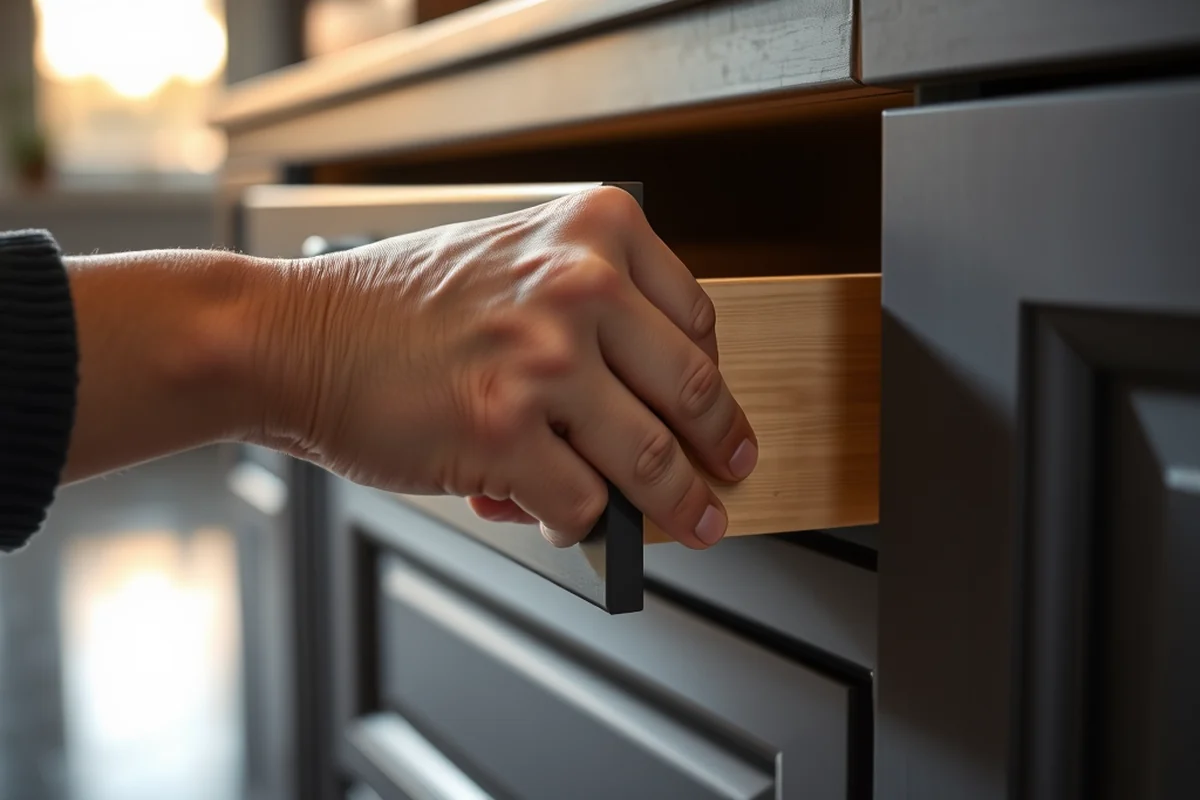
I’ve used everything from wood and metal to plastic and wire for my organizers, and each material has its pros and cons. For instance, wood is durable and looks great but is more expensive. Plastic is lightweight and affordable but may not be as strong. Metal is sturdy but can rust if not properly sealed.
I found that using a combination of materials works best. For example, I built a base using pine wood and added clear, waterproof plastic bins on top. This way, I have a sturdy structure with flexible storage options. The wood adds a warm, natural look, while the plastic allows me to easily replace or rearrange the storage as needed.
When selecting materials, consider your budget, how often you’ll use the organizer, and whether you want a modern or rustic look. I always recommend testing the material on a small scale before committing to a larger project.[4]
Material choice is the foundation of a great cabinet organizer — get this right, and you’ll be ahead of the game.
Related: Kitchen cabinet for drawers
Customizing Your Cabinet Organizer for Kitchen
I’ve found that customizing your organizer is the best way to ensure it fits perfectly in your kitchen. Whether you’re building it from scratch or modifying a store-bought organizer, customization allows you to make the most of your space.
For instance, I modified a basic wire rack by adding slats and dividers to separate my knives from my utensils. This not only made the space more functional but also made my kitchen look more organized. It took about an hour and only required basic tools like a saw and a screwdriver.
Customization can also include adding labels or color-coding for easy access. I used a label maker to create clear, waterproof labels for each section, which made it easy to find items quickly. This small addition made a huge difference in how efficiently I could use my kitchen.
Use a label maker or colored tape to clearly mark sections of your organizer. This will save time and reduce clutter in the long run.
“The first time I tried to find a jar of pickles in my kitchen cabinet, I spent 15 minutes digging through a jumble of mismatched…”— Upcycled Kitchen Cabinet Makeovers editors
Related: Wheelchair accessible kitchen cabinets
Maximizing Vertical Space with Cabinet Organizers for Kitchen
I was amazed at how much more I could store once I started using vertical organizers. I installed a series of over-the-sink racks and wall-mounted shelves that allowed me to store spices, cleaning supplies, and even my coffee maker in a single, organized space.
One of my favorite additions was a vertical organizer made from repurposed wood that I mounted on the back of my pantry door. It holds all my measuring cups, spoons, and small kitchen tools. Not only did it save me from cluttering my countertops, but it also made my kitchen look more polished.
Maximizing vertical space doesn’t require a complete renovation. Simple changes, like adding a hanging rail or using wall-mounted organizers, can make a world of difference. I’ve found that even a few well-placed organizers can transform a cramped kitchen into a functional space.
Related: Blue kitchen cabinets
Maintaining Your Cabinet Organizer for Kitchen
I’ve learned that even the best organizers need some care to last. I clean mine every few weeks with a damp cloth and mild soap to remove spills and dirt. For more stubborn grime, I use a mixture of vinegar and water, which is effective and non-abrasive.
I also make sure to check for any signs of wear or damage. For example, I noticed that one of the slats in my wood organizer was starting to warp. I replaced it immediately, which prevented the entire structure from becoming unstable. Regular inspections can save you from bigger problems down the line.
By maintaining your organizer regularly, you’ll ensure it continues to function well for years to come. I’ve found that a small investment of time and effort goes a long way in keeping my kitchen organized and efficient.
Related: Solid wood cabinets
Choosing the Right Layout for Your Cabinet Organizer for Kitchen
I’ve experimented with different layouts over the years, and I’ve found that grouping similar items together works best. For instance, I keep all my baking supplies in one section, and my cooking tools in another. This makes it easier to find what I need without digging through everything.
I also prioritize accessibility. I store frequently used items at eye level, while less-used items are placed higher or lower. This simple change has made a big difference in how quickly I can find what I need. I’ve even started using a pull-out drawer system for my utensils, which saves me from having to open multiple cabinets each time.
A good layout also depends on the size and shape of your cabinets. I’ve found that using dividers, shelves, and hooks can help create a more efficient layout. It’s all about finding the right balance between functionality and aesthetics.
Layout is everything — think about how you use your kitchen before you start organizing.
Related: How to organize kitchen drawers
The Benefits of a Cabinet Organizer for Kitchen
I’ve noticed a significant improvement in my daily routine since I started using a cabinet organizer for kitchen. It’s no longer a struggle to find my measuring cups or my favorite spices — they’re all in one place. This has saved me time and reduced the stress of meal prep.
Another benefit is that it has made my kitchen look more polished and professional. I’ve received several compliments from friends and family, and I’ve even had a few people ask me where I bought my organizers. They’re surprised that I built them myself.
Perhaps the biggest benefit is that it has made my kitchen a more enjoyable space to be in. I no longer feel overwhelmed by clutter, and I can focus on cooking, cleaning, or entertaining without the constant distraction of disorganization.
🧰 Budget Build
Use repurposed materials like old wood and wire baskets to create an affordable yet functional cabinet organizer for kitchen.
⏰ Weekend Version
Quick and simple organizer using pre-made dividers and shelves that can be installed in a few hours.
✨ Upgraded Finish
Add a professional touch with wood stain, metal hardware, and custom labels for a polished look.
🏠 Small-Space Adaptation
Compact organizer with foldable components and hanging storage for small kitchens or apartments.
🛟 Rental-Safe Option
Use removable, non-damaging organizers that can be easily taken down without leaving any marks or holes.
| The mistake | Why it happens | The fix |
|---|---|---|
| Not measuring your cabinets accurately | This can lead to buying or building an organizer that doesn’t fit properly, causing wasted time and money. | Take precise measurements and double-check them before proceeding with your project. |
| Ignoring the weight capacity of the organizer | Using an organizer that can’t support the weight of your items can lead to structural damage or even collapse. | Choose a material and design that can support the weight of your items, and reinforce it if needed. |
| Overlooking the need for adjustable components | Fixed organizers can become outdated as your needs change, making it difficult to adapt to new storage requirements. | Include adjustable shelves or dividers so you can easily modify the organizer as needed. |
| Neglecting to clean and maintain the organizer | Failing to clean your organizer can lead to the buildup of dirt, grime, and even mold, which can damage the organizer and make it less functional. | Make it a habit to clean your organizer regularly with a damp cloth and mild soap. |
Cabinet Organizer For Kitchen
Common Questions
What tools do I need to build a cabinet organizer for kitchen?
How long does it take to build a cabinet organizer for kitchen?
Can I use a cabinet organizer for kitchen in a small space?
What are the best materials for a cabinet organizer for kitchen?
References
- Chapter 8: Special Rooms, Spaces, and Elements - Access-Board.gov (access-board.gov)
- KITCHEN – TYPE A UNIT #26 - Arlington, WA (arlingtonwa.gov)
- Analysis of strength, durability, stability, and fatigue parameters of ... (bioresources.cnr.ncsu.edu)
- What's Under Your Kitchen Sink? - Cornell blogs (blogs.cornell.edu)
Cite this guide
Upcycled Kitchen Cabinet Makeovers (2026). Cabinet Organizer For Kitchen. https://upcyclehome.com/cabinet-organizer-for-kitchen/
Feel free to cite or share this guide.